
 Furnace & heating
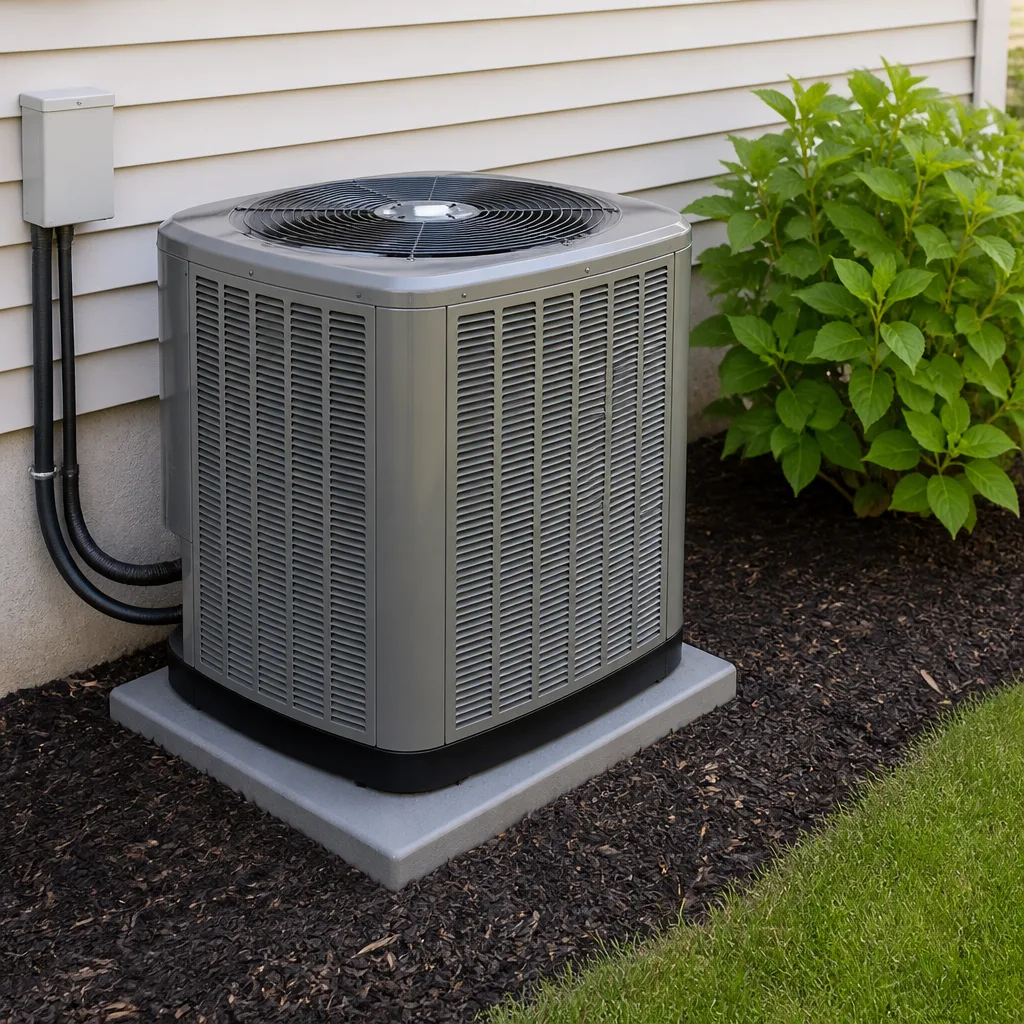 AC repair
 Heat pumps
 Ductless mini splits
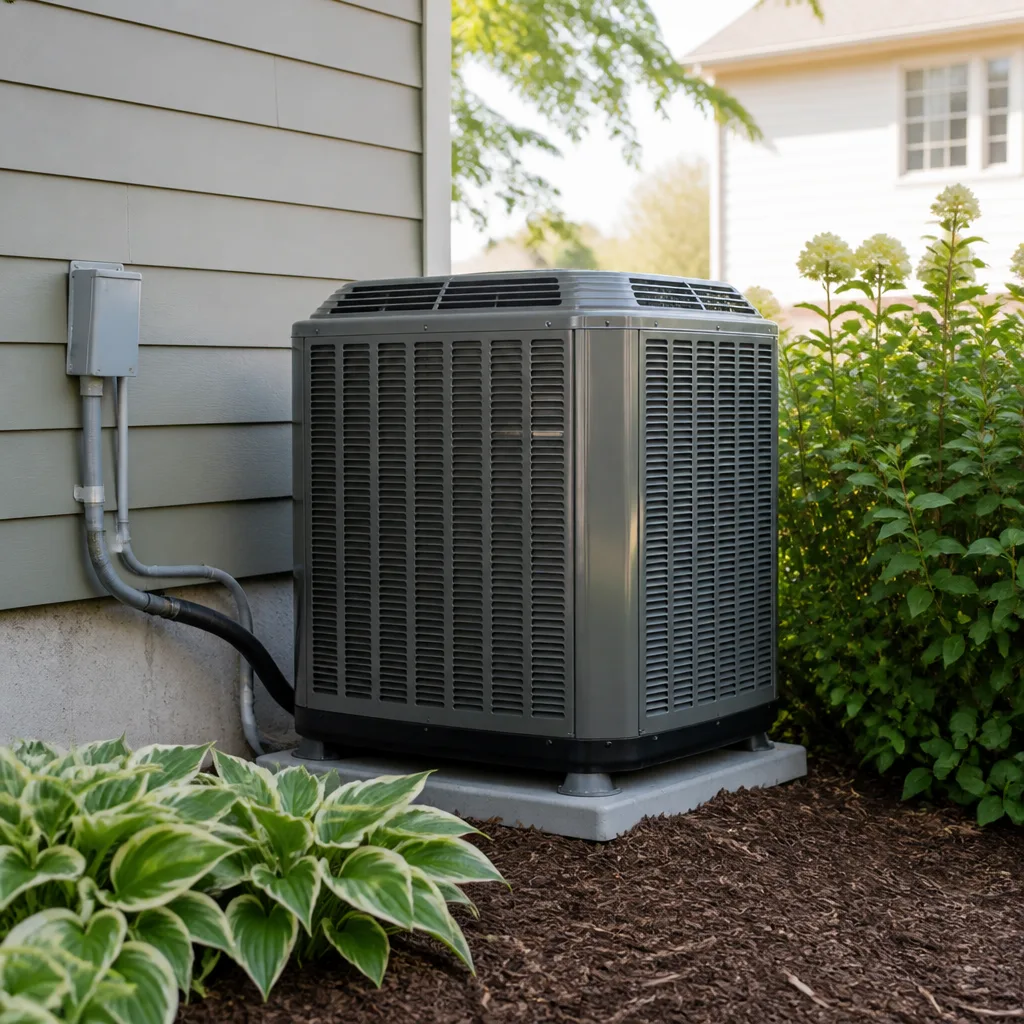 Trane
Trane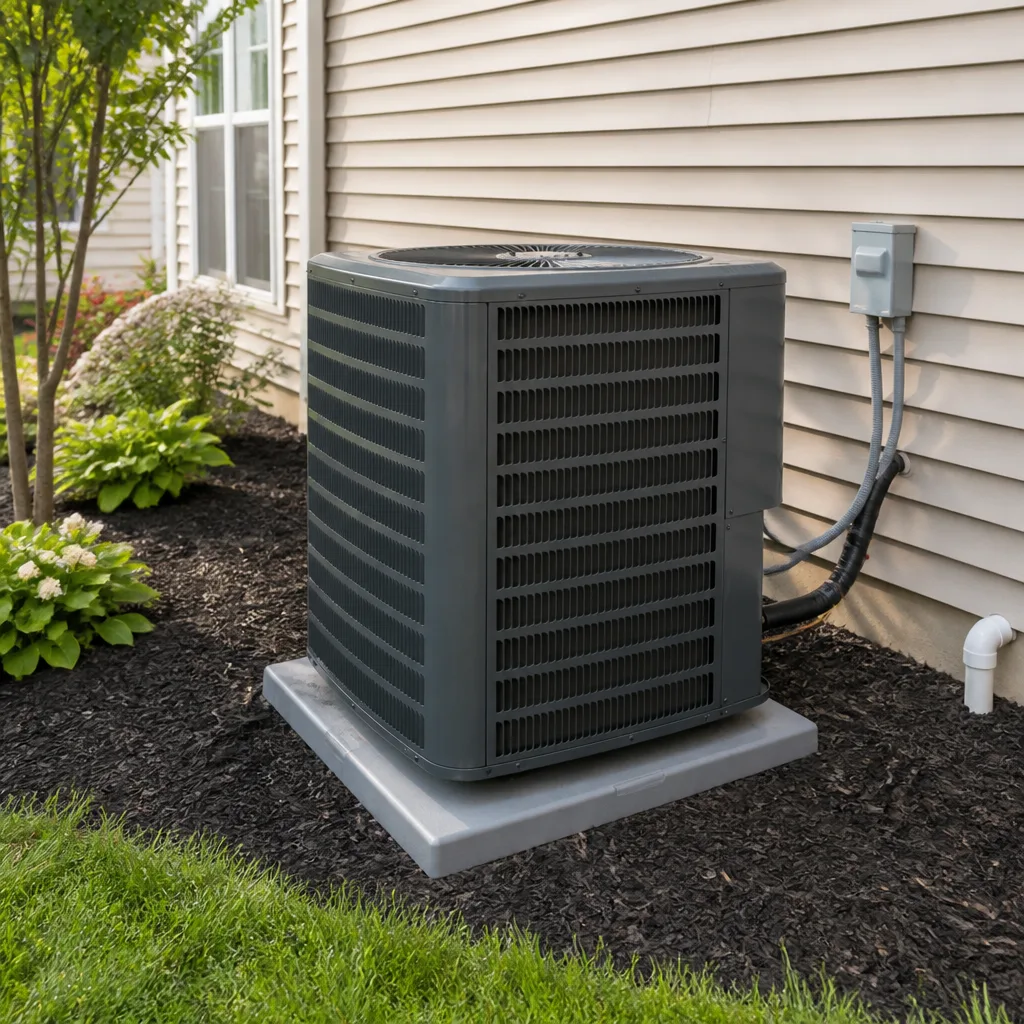 Goodman
Seasonal tune-up and full diagnostic on your Carrier, Trane, or Goodman system - readings shown to you before any repair is proposed
Diagnosis first, numbers second - you approve the repair price before a single part goes in.
Get your free estimateGoodman Capacitor Replacement: The Fort Lauderdale Owner’s Guide
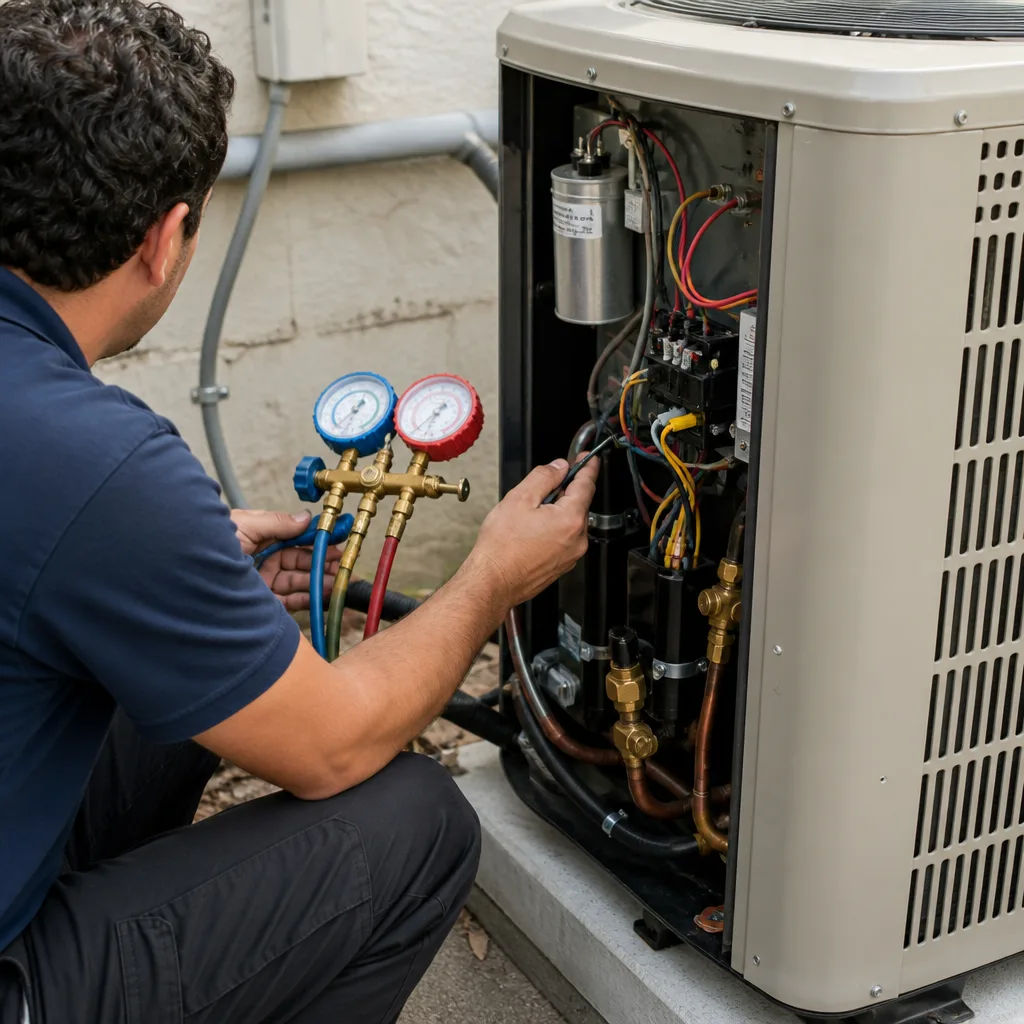
Goodman capacitor replacement in Fort Lauderdale typically runs $150 – $300 installed, and we stock the common Goodman dual-run and start capacitors on our trucks, so the job is usually done same day. Most homeowners discover the problem on a hot afternoon when the outside unit hums but the fan won’t spin, or the compressor tries to start and shuts off after a few seconds. The capacitor is the small cylinder inside the condenser that gives the fan motor and compressor the electrical kick they need to get moving. When it fails, the system can’t start properly, and South Florida heat makes that failure feel urgent fast.
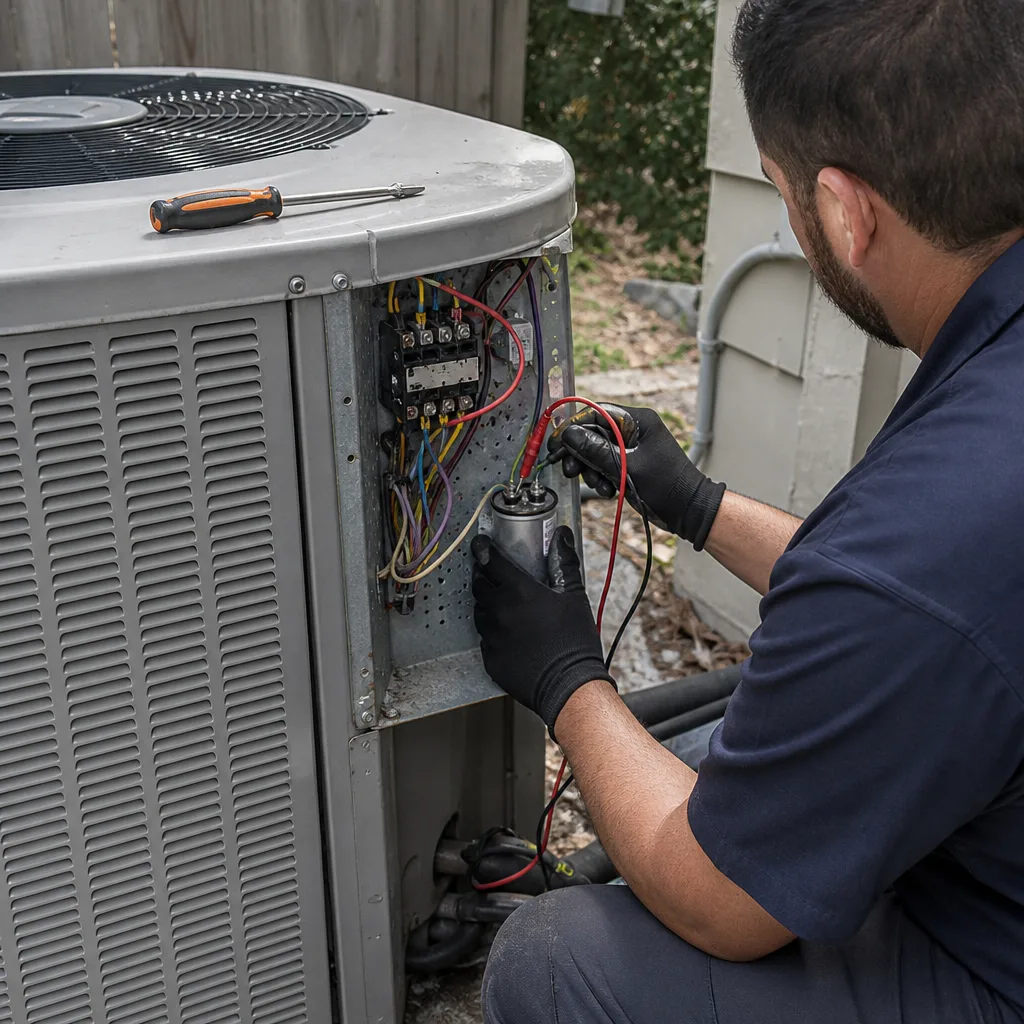
We’re Dalton Heating & Air Fort Lauderdale, an independent service provider. We’re not affiliated with Goodman, but we service Goodman equipment daily and keep their most common capacitor ratings in stock. Marco Benitez runs our crew, and his approach is simple: tell him the symptom, he’ll tell you the cause, and the price, before anything gets opened up.
Which Goodman Models This Applies To
Goodman uses capacitors across nearly every residential condenser and heat pump line they’ve built in the last 25 years: the GSX, GSZ, SSX, SSZ, and the current GSX13, GSX14, GSX16, and GSXC16 series, plus their Daikin-sibling units. If your outdoor unit has a Goodman or Amana badge, it has at least one capacitor, and most have a dual-run capacitor that serves both the fan motor and the compressor in a single housing.
The compatibility gotcha most owners miss: the capacitor rating printed on the old part is what matters, not the model number of the unit. Every Goodman condenser has a data plate on the side panel that lists the capacitor microfarad (µF) rating and voltage, usually something like 45/5 µF at 440 VAC for a 3-ton system. If you replace a 35/5 with a 45/5 because “it looked close,” the compressor will run hot and fail early. When we arrive, we read the old capacitor’s rating and match it exactly, then verify it against the unit’s data plate. Florida’s heat and humidity degrade capacitors faster than the national average. We commonly see them fail at the 5 to 8 year mark here, where a unit in a cooler climate might get 10 to 12.
On the OEM versus aftermarket question: Goodman’s factory capacitors, often branded under the AmRad or Genteq names, are solid parts. Quality aftermarket equivalents from AmRad, Titan HD, or Mars are also dependable and sometimes carry better temperature ratings. We’ll install either one and tell you which we’re using and why. What we won’t do is put in a cheap import that costs $12 wholesale and dies in a year. The part difference is maybe $25, and it’s not where you want to save money in Fort Lauderdale.
Styles & brands we work with
Signs Your Goodman Capacitor Replacement Is Failing
- The outdoor unit hums but the fan doesn’t spin. The capacitor can’t deliver the starting torque the fan motor needs, so the motor just sits there and buzzes until the thermal overload trips. This is the classic failed-capacitor symptom, and it’s usually the fan side of the dual capacitor that went weak.
- The compressor tries to start, then shuts off after a few seconds. You’ll hear a click, a brief hum, and then silence. The compressor side of the capacitor can’t hold enough charge to keep the motor running, so the unit short-cycles and never actually cools.
- A hot condenser that won’t cool the house. If the fan runs slowly or not at all, the outdoor coil can’t shed heat. The compressor keeps running hot, pressures climb, and the house never reaches setpoint. A weak capacitor often lets the fan spin at half speed, which is worse than no spin because it looks like it’s working.
- The capacitor is swollen, leaking, or bulging at the top. A healthy capacitor is a flat-topped cylinder. Heat and voltage stress boil the internal dielectric fluid, which builds pressure and domes the top. If you can see it, it’s already done. If you’re looking, the power needs to be off at the disconnect and the breaker, because a stored charge can still bite.
- The unit runs fine at night but struggles in afternoon heat. Capacitor performance drops as temperature rises. A weak capacitor may deliver just enough at 82 degrees to start the compressor, but not at 94 degrees when every component is heat-soaked. In Fort Lauderdale, that pattern shows up every spring as the afternoons climb.
One safety note up front, because this is the part where a well-meaning DIY job goes sideways: capacitors store electricity even after the power is off. A charged 440-volt capacitor can deliver a shock that stops your heart. If you’re going to look at the part, kill the breaker and the outdoor disconnect, and still treat the terminals as live until the capacitor is discharged. This is not a part to learn on. Marco has been doing this work since his days at Los Angeles Trade-Technical College, and he still treats every capacitor as charged until he’s metered it himself.
See the difference
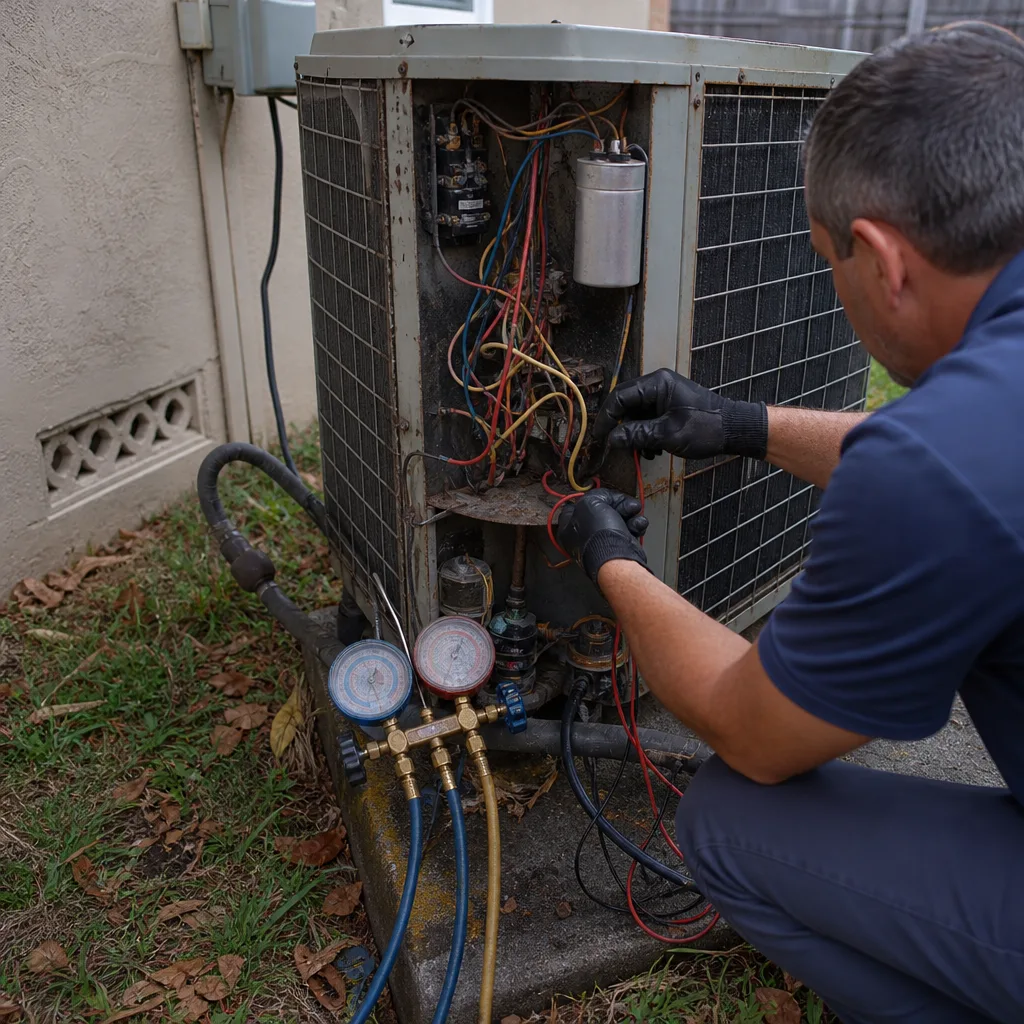 Before
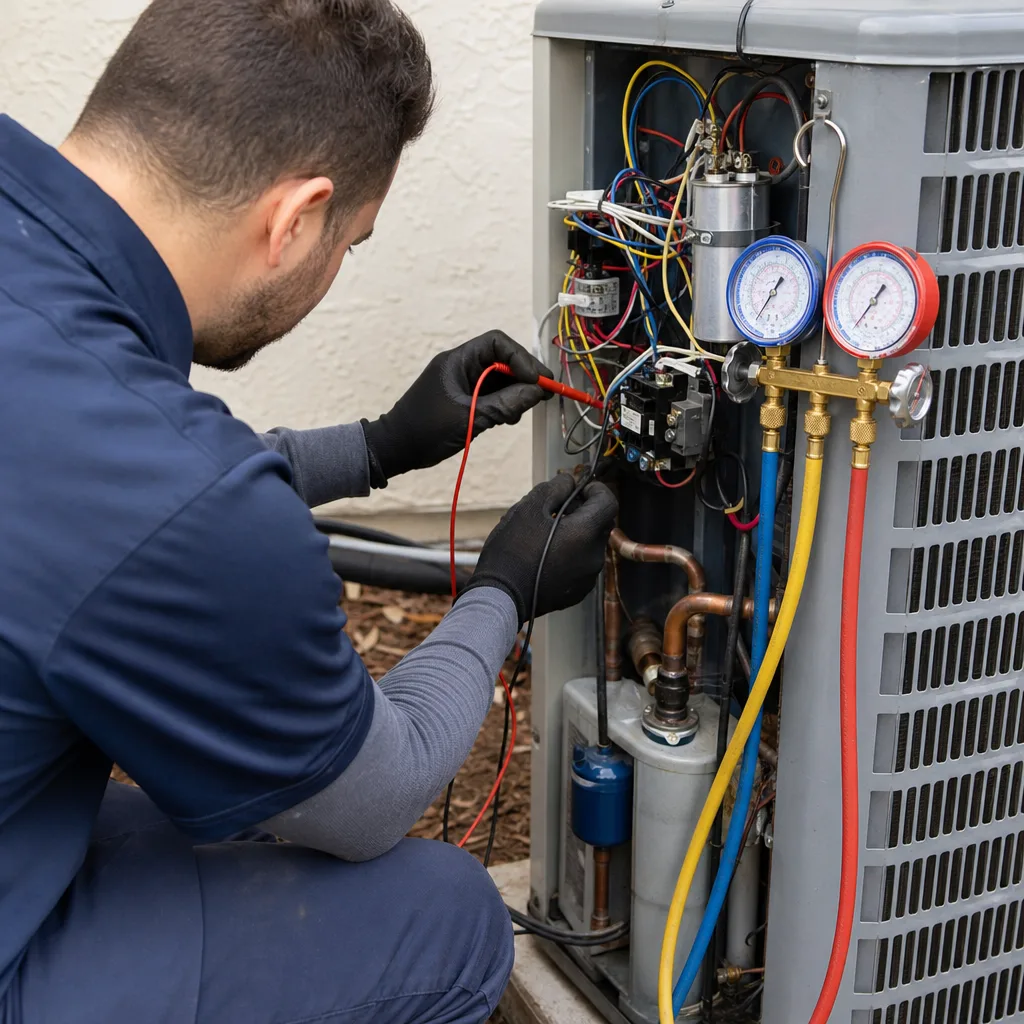 After
After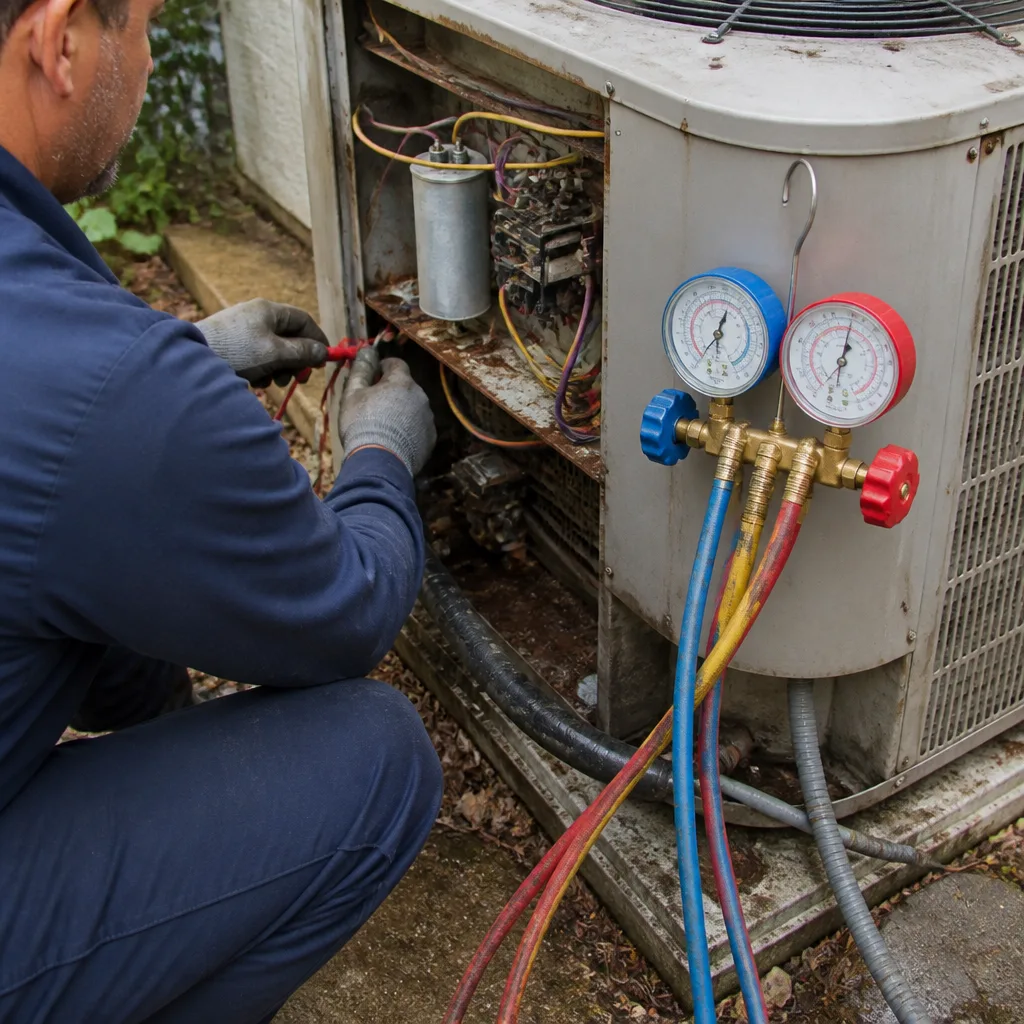 Before
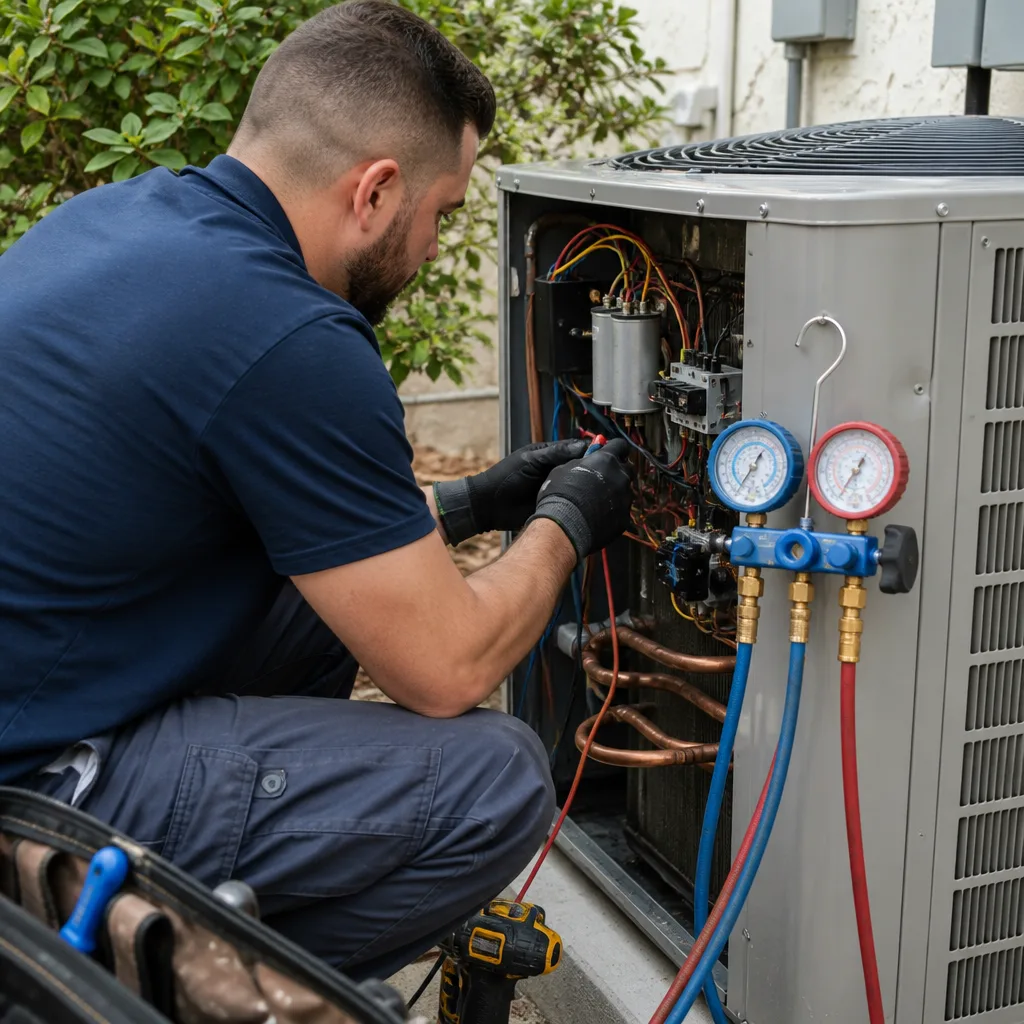 After
After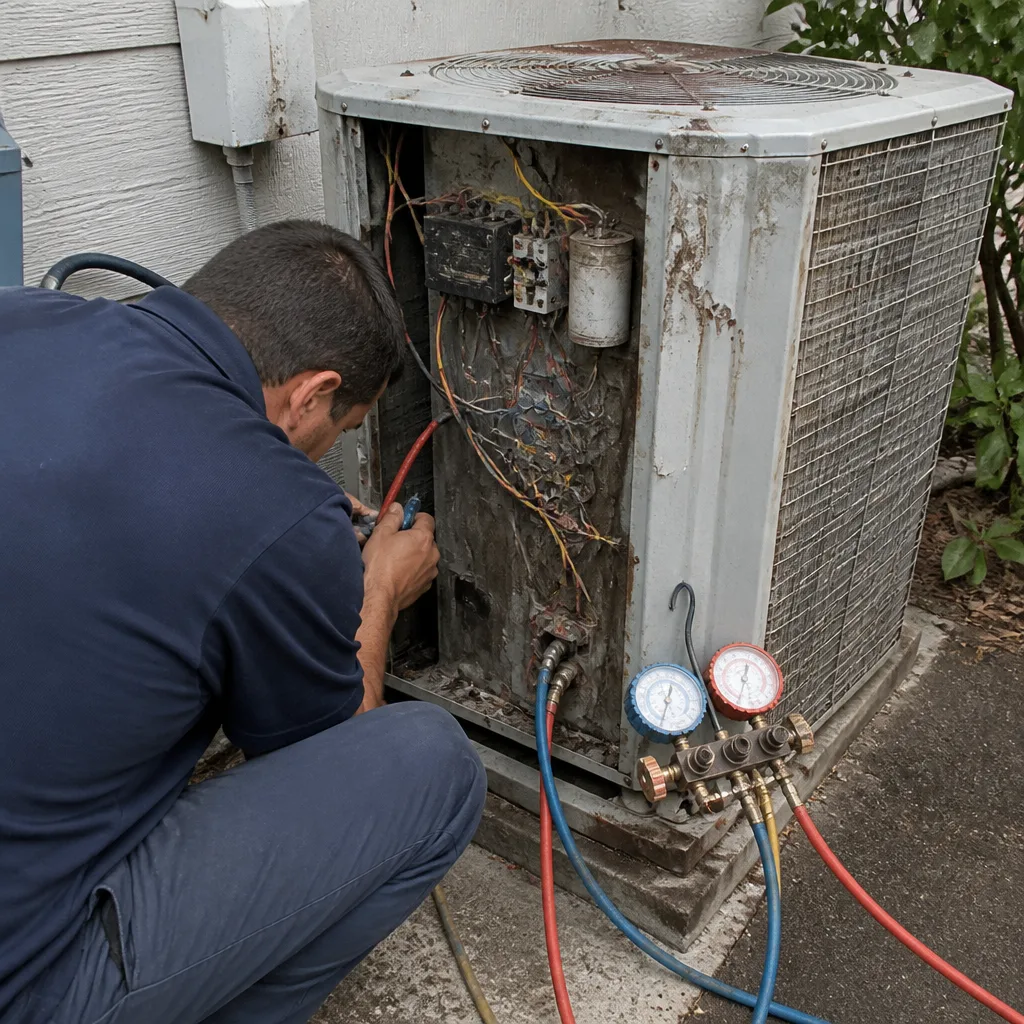 Before
 After
AfterReplacement Cost & What’s Included
In Fort Lauderdale, a Goodman capacitor replacement installed by a licensed contractor runs $150 – $300 depending on whether it’s a single-run or dual-run capacitor, and whether it’s an aftermarket or OEM part. A tune-up call runs $80 – $200 and often catches a weak capacitor before it strands you on a weekend. A full AC repair visit where the capacitor is one of several findings can run $150 – $650. We keep the common Goodman dual-run ratings (35/5, 40/5, 45/5, 50/5, 60/5) stocked on our trucks, plus a range of start capacitors for older units.
Here’s our pricing structure, always in writing before work begins:
- Capacitor replacement (single-run, aftermarket): $150 – $190 installed
- Capacitor replacement (dual-run, aftermarket): $180 – $240 installed
- Capacitor replacement (dual-run, OEM Goodman/AmRad): $220 – $300 installed
- Diagnostic visit only (if you decline repair): $80 – $120
- Full system tune-up with capacitor test: $80 – $200
Every capacitor replacement includes the part, the labor, verification that the new part draws the correct amperage, and a written guarantee for a full year under The Garrison Standard. If the repair fails in that window, we return at no charge. That’s not an upgrade and it’s not a promotion. It’s the policy on every repair, and it’s been that way since 2003.
DIY or Call Us?
The honest split is this: you can safely check the capacitor visually if you kill the breaker and the outdoor disconnect first. Look for a domed top, leaking oil, or a burnt terminal. That’s a diagnosis you can do standing outside the unit with the panel off. What you shouldn’t do is discharge, remove, and replace the part yourself. A 440-volt capacitor holds enough charge to cause serious injury, and a mis-wired replacement can damage the compressor, which turns a $200 repair into a $3,500 to $7,500 system replacement. That is not a trade you want to make by accident.
If the capacitor looks swollen or the unit hums and won’t start, call us at (754) 354-6972. We’ll show up inside the stated window, put the price in writing before the first screw comes out, and have your Goodman running same day in most cases. If it’s a capacitor, we’ve got it on the truck.
FAQs
In Fort Lauderdale, we typically see Goodman capacitors fail between 5 and 8 years, which is shorter than the 10 to 12 year lifespan they may reach in cooler climates. Elevated ambient heat, humidity, and long cooling runtimes from April through October all accelerate the degradation of the dielectric fluid inside the capacitor. Call (754) 354-6972 if your unit is in that age range and starting to act up. We’ll test the capacitor and tell you its true microfarad reading against its rating.
No. A failed capacitor cannot be repaired; it is a sealed, disposable component. Once the dielectric fluid breaks down or the internal windings short, the part has to be replaced. The good news is that replacement is one of the least expensive repairs on an AC system. Call (754) 354-6972 for an exact quote on your Goodman unit.
Most Goodman capacitor replacements take 30 to 60 minutes from arrival to a running unit. The actual swap is quick. The time goes into verifying the old part’s rating against the unit’s data plate, installing the correct replacement, and testing amperage draw to confirm the compressor and fan are starting within spec. We’ll have it done same day in nearly every case.
Yes. We stock the common Goodman dual-run ratings (35/5, 40/5, 45/5, 50/5, 60/5 µF) plus start capacitors for older equipment, and we carry aftermarket and OEM Goodman options. For less common ratings, we can typically source the part same day from local supply houses. We also stock parts for Carrier, Trane, and Lennox equipment for multi-brand households.
Written by Marco Benitez, Owner, Dalton Heating & Air Fort Lauderdale at Dalton Heating & Air Fort Lauderdale, serving Fort Lauderdale and nearby areas.