
Last updated October 16, 2026
 AC repair
 Furnace & heating
 Heat pumps
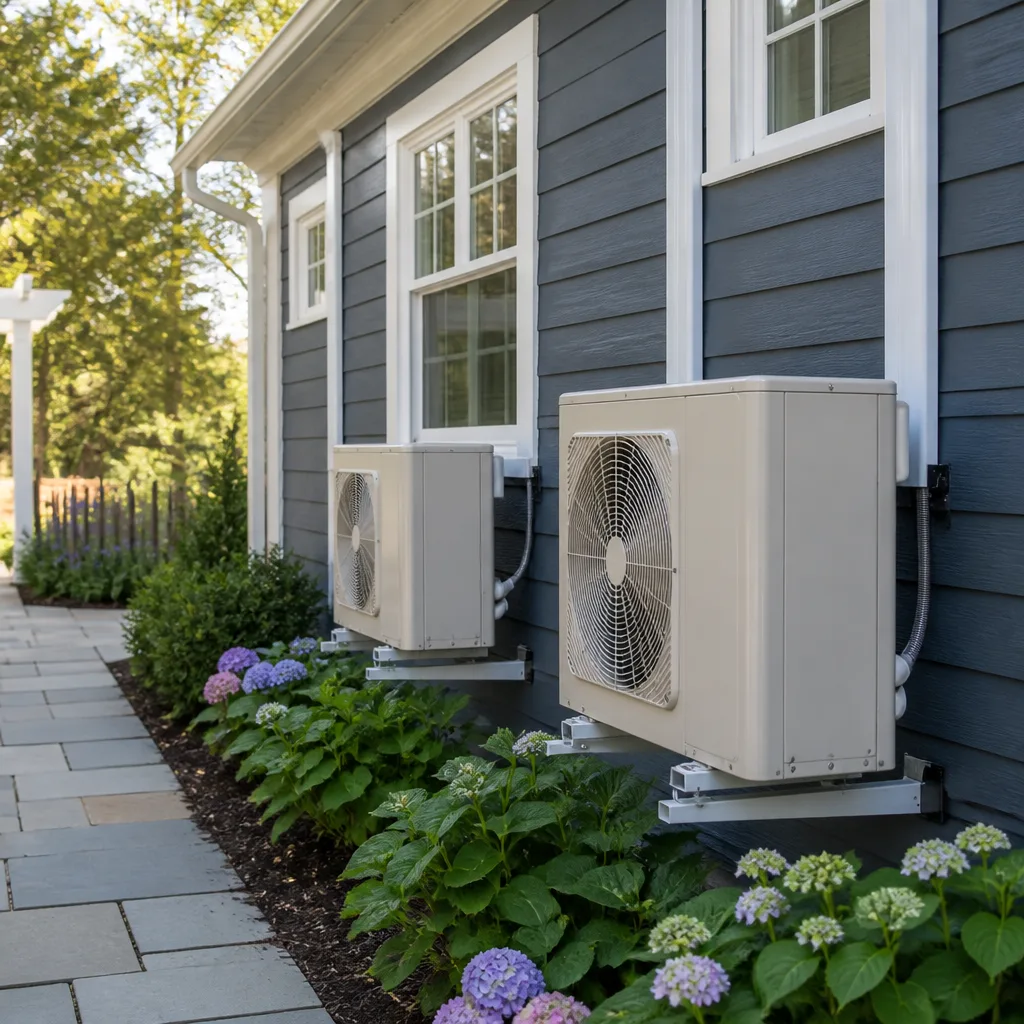 Ductless mini splits
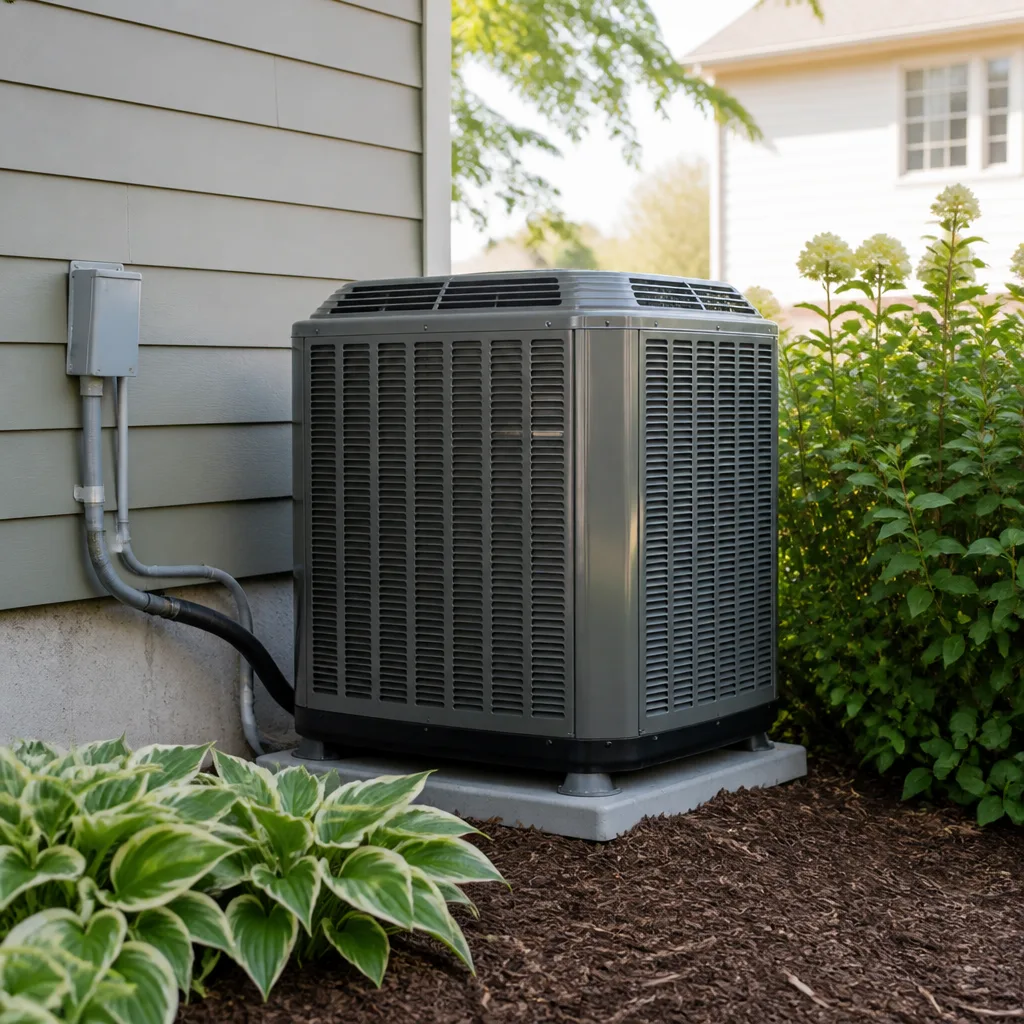 Trane
Trane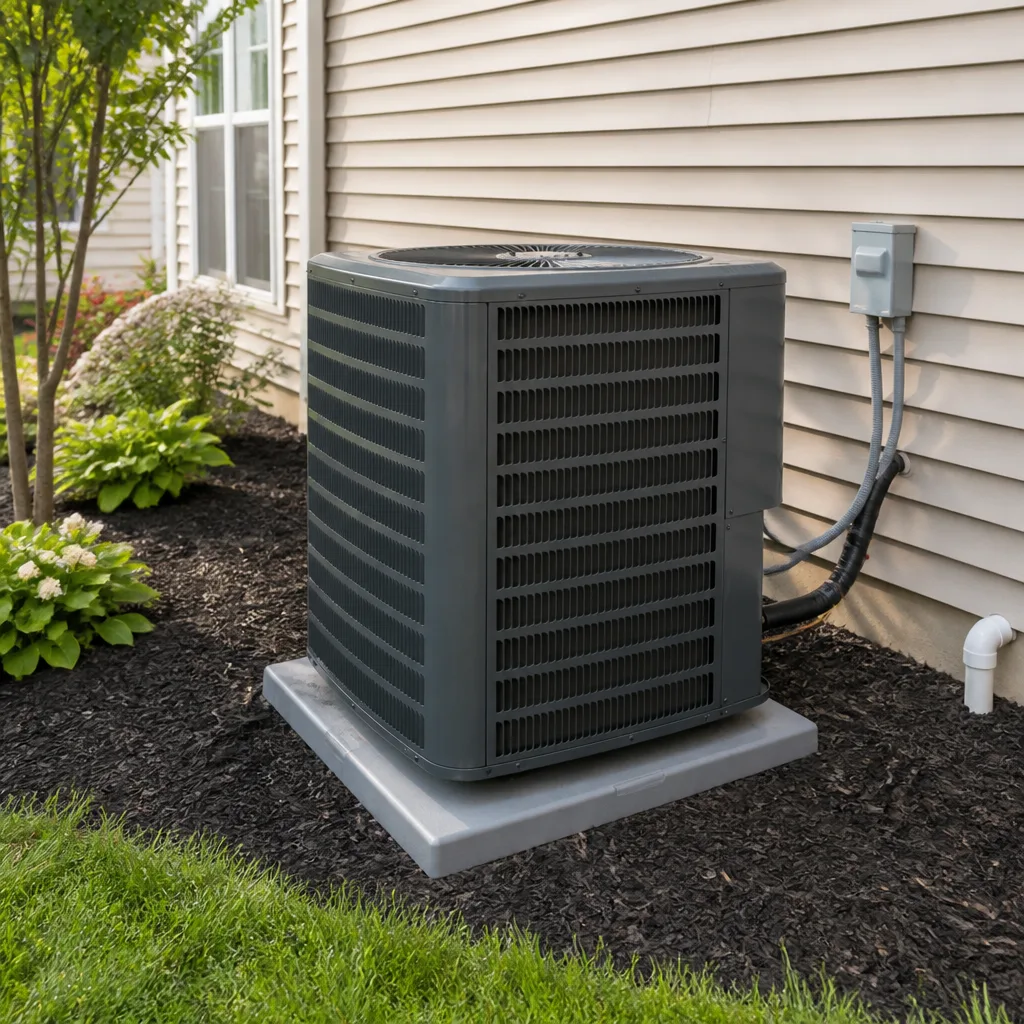 Goodman
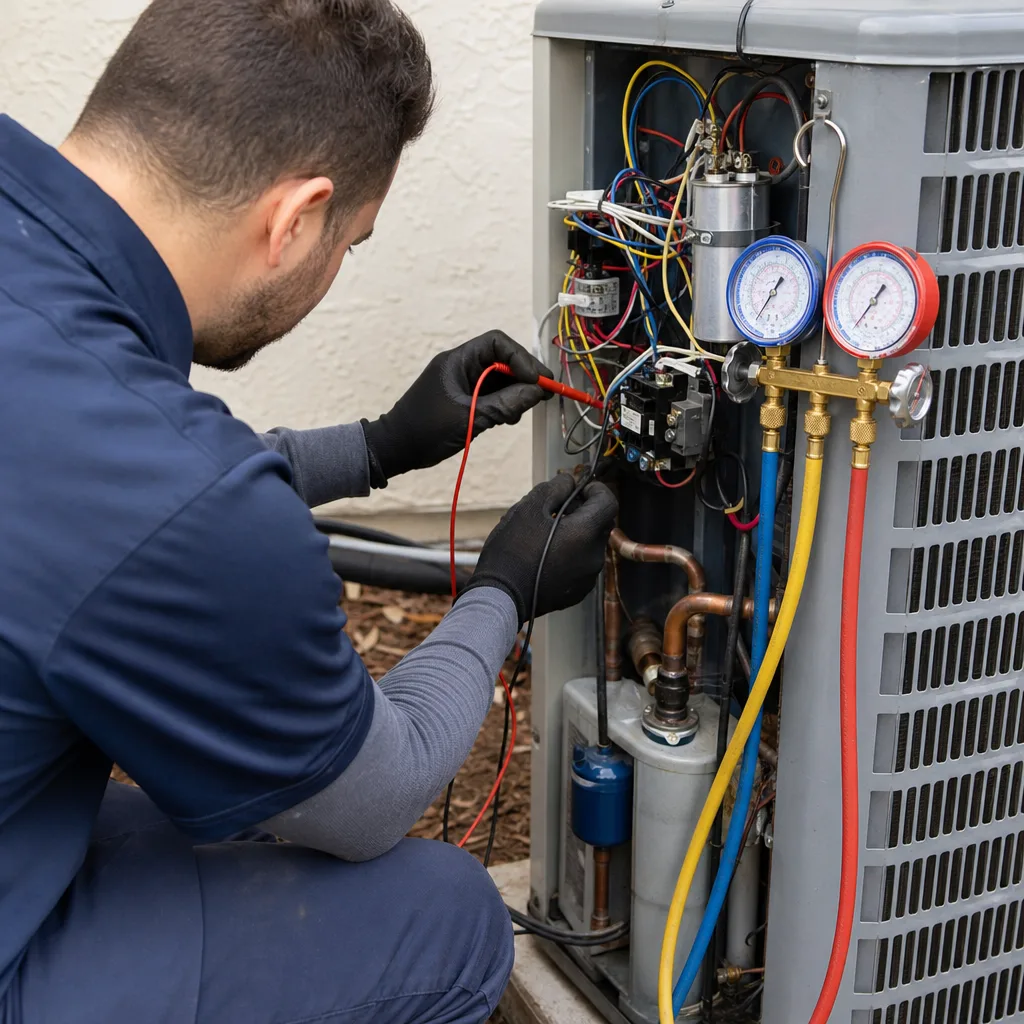
Seasonal tune-up and full diagnostic on your Carrier, Trane, or Goodman system - readings shown to you before any repair is proposed
Diagnosis first, numbers second - you approve the repair price before a single part goes in.
Get your free estimateDIY vs Professional HVAC: The Fort Lauderdale Homeowner’s Decision Guide
Most homeowners in Fort Lauderdale don’t realize they’re already legally permitted to handle a surprising amount of their own HVAC maintenance, while other tasks they assume are simple could land them a federal fine of up to $44,539 per day. The line isn’t drawn by skill or confidence. It’s drawn by the EPA, specifically Section 608 of the Clean Air Act, which has governed refrigerant handling since 1993. This guide walks through exactly which jobs sit on your side of that line, which ones don’t, and where spending $40 on a tool beats writing a $400 check to a contractor in Fort Lauderdale.
Styles & brands we work with
Quick Answer
Fort Lauderdale homeowners can legally handle air filter replacement, condensate drain flushing, evaporator coil cleaning, and capacitor replacement (with proper discharge), but any task involving refrigerant, including adding, removing, or recovering it, requires an EPA Section 608 certification and carries federal fines for unlicensed handling. The practical decision comes down to three questions: is it legal, will it void your warranty, and what does getting it wrong actually cost? If you’re not certain on all three, call a professional at (754) 354-6972.
Table of Contents
- What’s Legal to DIY: The Florida Homeowner’s Actual Boundary
- The Refrigerant Line: Why EPA Section 608 Draws a Hard Border
- The Warranty Gray Zone: Legal DIY That Can Still Cost You
- The Capacitor Reality Check: $25 Part, $400 Mistake
- DIY Diagnosis: Gathering Data That Gives a Technician a Head Start
- What the Fort Lauderdale Climate Does to HVAC Systems
- Real Tool Costs: What You’ll Actually Spend to DIY
- Common Mistakes to Avoid
- When to Call a Professional
- Frequently Asked Questions
- The Bottom Line
What’s Legal to DIY: The Florida Homeowner’s Actual Boundary
There’s no Florida statute that prohibits a homeowner from opening their own air handler or condenser unit to perform basic maintenance. The restriction that matters is federal, and it applies to one substance: refrigerant. Everything else sits in a category governed by practicality, skill, and manufacturer warranty terms. Here’s what sits cleanly on the homeowner’s side of the line in Fort Lauderdale.
Tasks You Can Legally and Practically Handle Yourself
- Air filter replacement: No tools required. A $8 – $20 pleated MERV 8 filter, changed every 30 – 60 days during Fort Lauderdale’s heavy-use months, is the single highest-ROI maintenance task on any system. A clogged filter is the leading cause of frozen evaporator coils in South Florida.
- Condensate drain flushing: Your air handler produces gallons of condensation daily in Florida humidity. A $12 wet-vac attachment or a cup of white vinegar poured through the drain line every 60 days prevents the bacterial sludge that causes drain pan overflows and water damage in Fort Lauderdale homes.
- Evaporator coil cleaning: With a $14 can of no-rinse foaming coil cleaner from any Fort Lauderdale hardware or HVAC supply store, you can clean the indoor coil through the air handler’s access panel. This is safe, legal, and recommended twice a year in South Florida’s salt-air environment.
- Condenser coil rinsing: A garden hose with a spray nozzle, aimed from the inside of the unit outward, clears the salt, sand, and pollen that accumulate on outdoor coils in Fort Lauderdale. Turn the power off at the breaker first. This takes 20 minutes.
- Capacitor replacement: Legal in Florida for homeowners, with one caveat: you must discharge the capacitor safely first with a $10 – $15 resistor discharge tool. A dual-run capacitor for most residential units costs $18 – $45 at a supply house. We’ll cover the risk profile in detail below.
- Thermostat battery replacement and programming: Self-explanatory. If your thermostat screen is blank and the system won’t kick on, a dead battery is a common culprit in Fort Lauderdale households.
None of these tasks require a license in Florida. None of them touch refrigerant. All of them can be completed by a careful homeowner with basic tools in under an hour. The moment a job requires opening a refrigerant line, the picture changes completely. For anything beyond these items on the AC side, our AC Repair in Fort Lauderdale page breaks down what service calls typically involve and what they cost.
The Refrigerant Line: Why EPA Section 608 Draws a Hard Border
Refrigerant is the single most regulated substance in a residential HVAC system, and the reason has nothing to do with contractor protection. R-22 and R-410A are hydrochlorofluorocarbons and hydrofluorocarbons. When released into the atmosphere, they deplete the ozone layer (R-22) or contribute to global warming (R-410A) at rates hundreds to thousands of times higher than carbon dioxide. The EPA began regulating who can purchase and handle refrigerants under Section 608 of the Clean Air Act Amendments in 1993, and that regulation has only tightened as refrigerant chemistry has evolved.
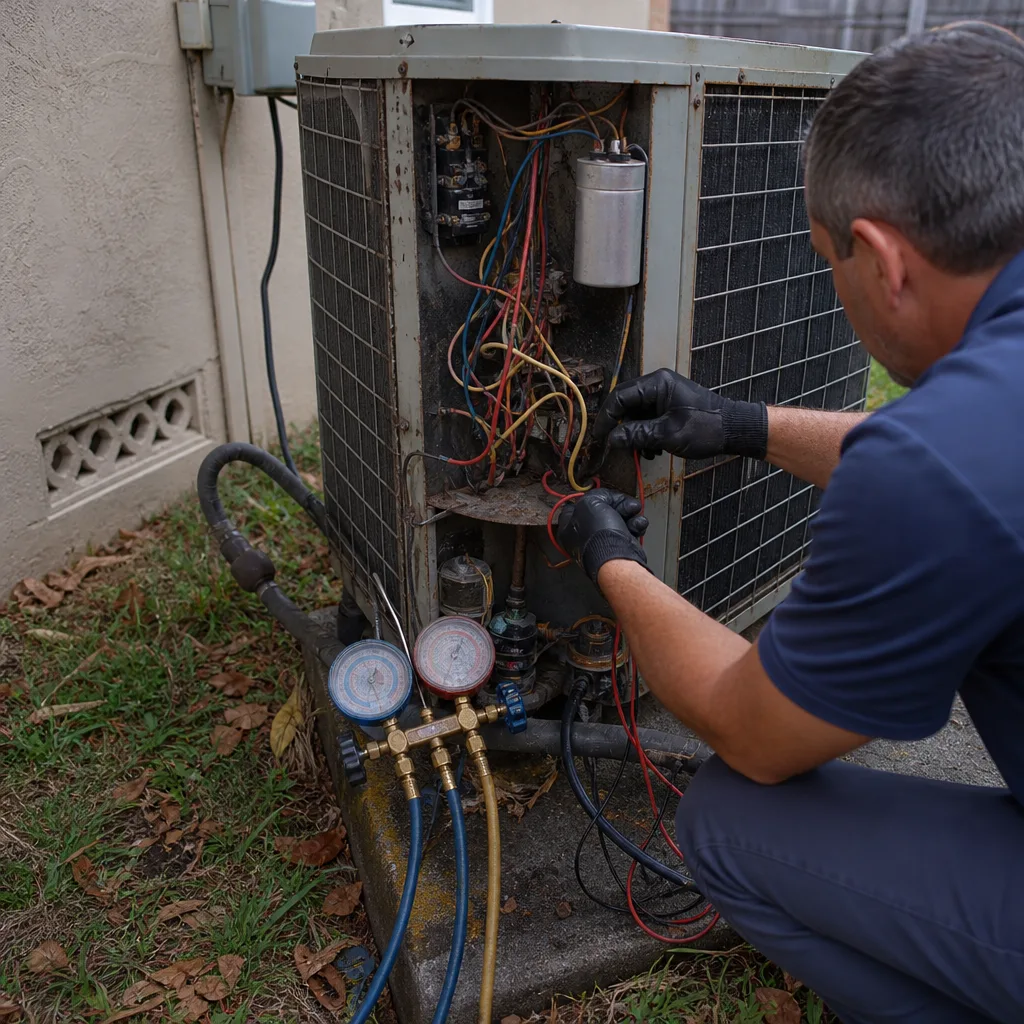
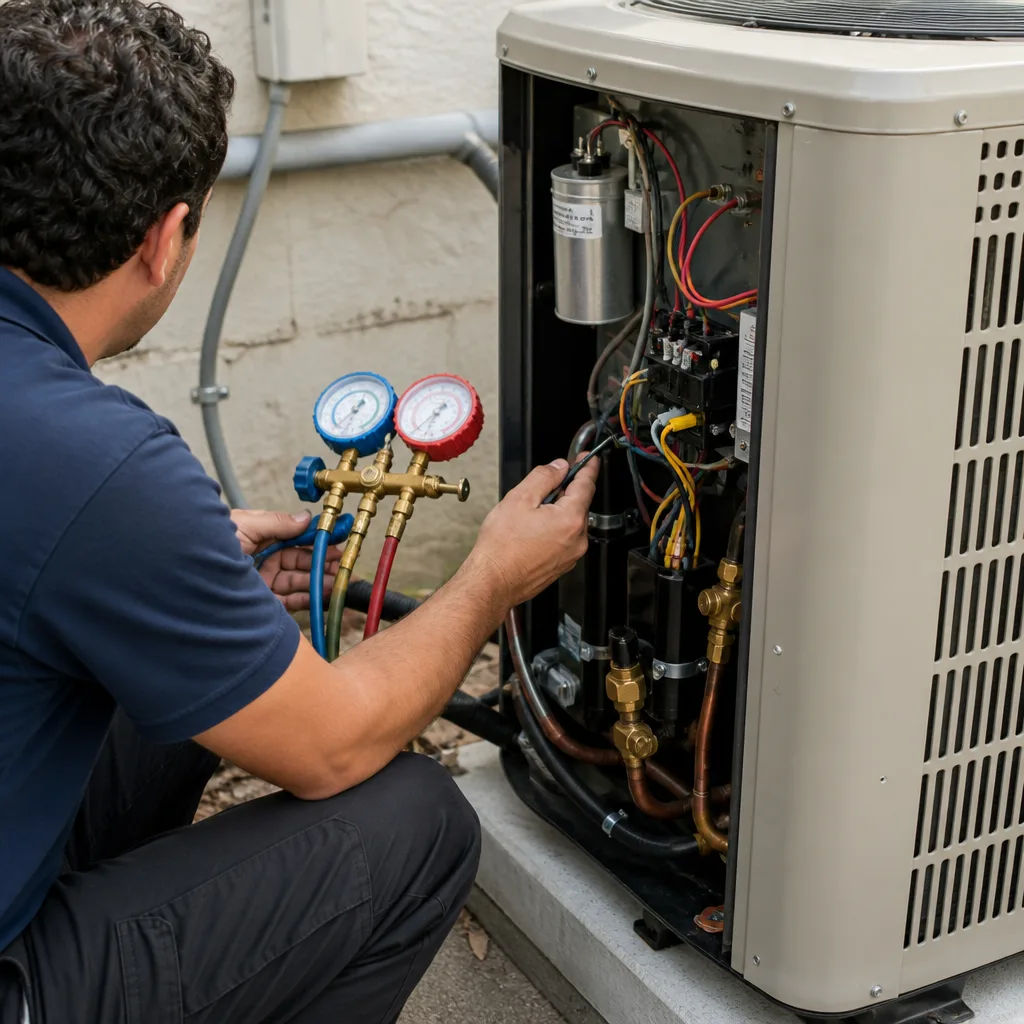
Here’s what the law actually says in practical terms: any person who handles refrigerant by adding it, removing it, recovering it during dismantling, or even connecting a gauge manifold set to a system, must hold an EPA Section 608 certification. This applies to technicians at every HVAC company in Fort Lauderdale, and it applies equally to a homeowner standing in their own driveway. The certification isn’t a state license. It’s a federal credential earned by passing an EPA-approved exam covering refrigerant chemistry, recovery procedures, leak detection, and safe handling practices. Our guide to HVAC Permits, Codes & Inspections in FL: What You Need to Know explains how this fits with state and local requirements.
The penalty structure is where most DIY-minded homeowners stop reading: the EPA has authority to assess fines up to $44,539 per day per violation. That’s not a scare number printed by a trade group. It’s the current EPA civil penalty maximum, adjusted for inflation from the Clean Air Act’s original statutory language. A single day of unlicensed refrigerant handling in Fort Lauderdale, even something as seemingly innocent as “just topping off” a system that’s low on R-410A, exposes you to that level of federal liability. In practice, EPA enforcement tends to focus on intentional venting and commercial-scale violations, but the legal exposure is real and uninsurable for a homeowner.
Beyond the legal exposure, there’s a practical reason refrigerant work doesn’t make sense as DIY. Proper refrigerant handling requires a recovery machine ($800 – $1,500 for an entry-level unit), a vacuum pump ($150 – $400), a digital manifold gauge set ($200 – $600), and a refrigerant scale ($100 – $250). That’s over $1,200 in equipment minimum, not counting the cost of the refrigerant itself, which in Fort Lauderdale’s market runs $60 – $150 per pound for R-410A depending on the distributor and whether it’s virgin or recovered. A professional service call that includes a leak search, repair, evacuation, and recharge typically runs $400 – $900 in Broward County. See our HVAC Cost Breakdown: The Fort Lauderdale Homeowner’s Reference for 2026 for a fuller picture. The math favors the pro even before the federal fine enters the calculation.
The Warranty Gray Zone: Legal DIY That Can Still Cost You
Here’s the part that surprises many Fort Lauderdale homeowners: several tasks are perfectly legal to do yourself and will still void the manufacturer’s parts warranty on your equipment. The legality and the warranty question are two completely separate issues, and manufacturers write their warranty terms to protect themselves from claims caused by untrained hands.
Legal But Warranty-Voiding Tasks
- Thermostat wiring beyond a simple swap: Replacing a thermostat, wire-for-wire, is usually fine. Reconfiguring low-voltage wiring, adding a C-wire, or attempting to wire a smart thermostat into a system designed for a basic digital model can burn out the transformer or the control board. Most HVAC manufacturers, including the brands we service like Goodman and Lennox, will deny warranty claims on control boards when the damage traces back to incorrect low-voltage wiring.
- Filter drier replacement: The filter drier is a small cylinder on the liquid line that removes moisture and acid from refrigerant. Replacing it legally requires recovering the refrigerant, opening the system, brazing in the new drier with an oxy-acetylene torch, pulling a vacuum, and recharging. Do it without certification and you’re in both legal and warranty-violation territory. Do it with certification but without manufacturer authorization and the warranty on the compressor can be voided if the manufacturer traces the failure to improperly brazed joints.
- TXV (thermostatic expansion valve) adjustment or replacement: The TXV meters refrigerant into the evaporator coil. Adjusting it requires connecting gauges (refrigerant handling, so Section 608 applies) and making fine superheat adjustments. Getting this wrong causes liquid slugging, where unvaporized refrigerant hits the compressor, destroying it. A seized TXV is a legitimate diagnosis that requires professional equipment to confirm, and any homeowner manipulation of it is a fast track to a denied warranty claim.
Our technicians at Dalton Heating & Air Fort Lauderdale home office see warranty claims denied every year because a well-meaning homeowner opened a sealed system or rewired a thermostat. The manufacturer doesn’t care that the work was “technically legal.” They care that it wasn’t done by a licensed, factory-trained technician following the manufacturer’s service literature.
The Capacitor Reality Check: $25 Part, $400 Mistake
The capacitor is the component DIY forums rally around as the easiest “win” for a homeowner. A dual-run capacitor gives the compressor and fan motor the starting jolt they need to spin up. When it fails, the symptoms are classic: the outside unit hums but doesn’t start, or the fan won’t spin. A replacement part costs $18 – $45. A service call to replace it in Fort Lauderdale runs $180 – $350. On paper, that’s the strongest DIY case in all of HVAC.
The reality is more nuanced. A capacitor stores electrical charge even after the power is cut. Touch the terminals without discharging it and you’ll take a shock at 370 to 440 volts, which can cause burns, falls, and in rare cases cardiac arrhythmia. That’s why the first step in any responsible capacitor replacement is deliberate and specific discharge.
Here’s the safe discharge procedure, written for a homeowner who has confirmed the capacitor is actually the problem and owns the right tools:
- Turn off the power at the breaker and at the outdoor disconnect box mounted to the wall near the condenser.
- Remove the condenser’s access panel, typically held by 4 – 6 screws.
- Locate the capacitor. It’s a metal cylinder, usually silver or gray, about the size of a soda can, with two or three terminals on top labeled HERM, FAN, and C.
- Use a capacitor discharge tool (a resistor-based device, $10 – $15 at any supply house, not a screwdriver) across each terminal pair: HERM to C, FAN to C, and HERM to FAN. Hold the tool’s probes on the terminals for 5 seconds each.
- Confirm with a multimeter set to DC voltage that the capacitor reads 0V before touching the terminals.
- Photograph the wiring before removing anything. Wrong wiring on the new capacitor will send the fan spinning backward or fail to start the compressor.
- Remove the old capacitor. Install the new one with the exact same microfarad (µF) rating and voltage rating or higher. A lower rating will fail; a wrong microfarad value will overheat the compressor windings.
The cost of getting it wrong compounds quickly. A capacitor that’s misdiagnosed as the problem means you spent $35 and the system still doesn’t work. A capacitor that’s wired incorrectly can send voltage back through the system, damaging the contactor ($40 – $80 part, $200 – $400 total repair), the run board ($150 – $350 part), or the compressor itself ($1,800 – $3,500 in Fort Lauderdale’s market, including labor). That’s how a confident $25 Saturday project becomes a $400 service call, or worse, a system replacement quote. If any step above feels uncertain, this is a job that our techs handle on a single visit, with the repair guaranteed in writing for a full year. If it fails in that time, we return at no charge, per The Garrison Code.
DIY Diagnosis: Gathering Data That Gives a Technician a Head Start
There’s a powerful middle path between “call for every symptom” and “attempt every repair yourself.” It’s the diagnostic gather. When you can hand a technician specific measurements, two things happen: the diagnosis time shortens (so you pay less for diagnostic labor), and the risk of misdiagnosis drops. Here’s what useful structured data looks like, and what tools you need to collect it.
Step-by-Step: The Homeowner’s Diagnostic Routine
- Record the temperature split. Put a digital thermometer ($10 – $20) in a supply vent closest to the air handler and one in the return grille. Run the system for 15 minutes. Subtract the supply from the return. A healthy split in Fort Lauderdale’s humidity is 15 – 20°F. Less than 14°F suggests low refrigerant, a dirty coil, or a blower issue. More than 22°F suggests restricted airflow.
- Check the air filter. If it’s visibly dirty, change it before any other diagnostic step. A $10 filter fixes more “airflow issues” in Broward County than any other single repair.
- Listen to the outside unit for 30 seconds. Hum without fan spinning: capacitor or fan motor. Click and nothing: contactor or fuse. Loud buzz with compressor running: compressor or refrigerant issue. Grinding: fan motor bearings.
- Check the breaker and the disconnect. Confirm power is reaching the unit. A tripped breaker that re-trips immediately is a real electrical fault, not a nuisance trip.
- Look for ice on the refrigerant lines or the indoor coil. Ice formation inside a Florida air handler means the coil is starved: either low refrigerant, a clogged filter, or a blocked return. Shut the system off and call for service with the details you’ve already gathered.
- Test the thermostat. Set it 5 degrees below room temp in cooling mode and verify the system responds within 30 – 60 seconds. If it doesn’t, note whether the thermostat clicks, the blower runs, and the outside unit hums.
When you call a technician, lead with the data, not the interpretation. Saying “I measured a 9-degree split across my return and the supply in the hallway, the outside unit hums but the fan doesn’t spin, and the filter is 3 weeks old” tells a professional everything they need to bring the right part on the first visit. Saying “it’s not cold enough” means the technician is now starting from zero and the diagnostic clock starts running on your dime. In our experience at Dalton Heating & Air Fort Lauderdale, a homeowner who calls with the temperature split already measured cuts total time on the job by 30 to 45 minutes.
What the Fort Lauderdale Climate Does to HVAC Systems
The DIY-versus-pro calculation changes when you understand what Fort Lauderdale’s environment does to HVAC equipment differently than, say, Orlando or Atlanta. Three factors shape every repair decision in this market.
Salt air. Fort Lauderdale sits on the Atlantic coast, and the prevailing easterly breeze carries salt spray inland for several miles. Coastal neighborhoods like Las Olas Isles, Rio Vista, Victoria Park, Coral Ridge, and Harbor Beach see accelerated corrosion on outdoor condenser coils, electrical connections, and the steel louvers that protect them. A condenser coil that lasts 15 years in a dry climate may last 8 – 10 in a Fort Lauderdale beach-adjacent property. Salt corrosion on wiring terminals is a common cause of intermittent electrical faults, and cleaning those terminals requires an electrical contact cleaner and a careful hand, not a boatload of specialty tools.
Year-round runtime. Fort Lauderdale’s cooling season runs effectively from March through November, with the heaviest load from June through September. A system in this market runs more hours annually than most systems in the lower 48, which means wear items like capacitors, contactors, and fan motors fail on an accelerated schedule. The national average for capacitor life is roughly 5 – 7 years. In Fort Lauderdale, that drops closer to 4 – 6.
Humidity as a distributed problem. Florida humidity doesn’t just make a system work harder; it directly contributes to the most common local failure: condensate drain clogs. The biological sludge that grows in a wet, warm drain line is a product of exactly the conditions Fort Lauderdale supplies year-round. A drain line that would stay clear for years in Arizona clogs within a season here. Regular flushing, which you can do yourself with $2 worth of vinegar, is preventive work that pays real dividends in this climate.
This environment also shapes what fails most often in Fort Lauderdale systems. Our service data shows the highest-frequency repairs in this market are, in order: capacitor failures, condensate drain clogs, contactor failures, fan motor failures, and the occasional refrigerant leak on systems older than 10 years. Three of those five are within a careful homeowner’s wheelhouse. The other two, refrigerant leaks and fan motor replacement, require skills and tools most homeowners don’t have. If you’re looking at furnace work, the picture is different but the decision framework is similar, and our Furnace Repair in Fort Lauderdale page covers that side of the trade in detail.
Real Tool Costs: What You’ll Actually Spend to DIY
DIY evangelists love quoting the price of the part and ignoring the price of the tools. Here’s the honest math for a Fort Lauderdale homeowner starting from zero, equipped with nothing more than a flathead screwdriver and a socket set.
Basic DIY toolkit for simple maintenance:
- Digital thermometer: $10 – $20 (for temperature split measurement)
- Wet-vac or shop vac with hose adapter: $25 – $50 (for drain line flushing)
- No-rinse coil cleaner: $12 – $18 per can (two cans per year recommended)
- MERV 8 pleated filters: $8 – $20 each, replaced every 30 – 60 days during summer
- Multimeter with capacitance tester: $25 – $60 (for capacitor testing before replacement)
- Capacitor discharge tool: $10 – $15 (mandatory before touching any capacitor terminal)
Total entry cost for the maintenance-and-basic-repair toolkit: approximately $100 – $180, depending on which multimeter you choose and whether you already own a shop vac. That’s less than a single routine service call in Fort Lauderdale, where preventive maintenance visits typically run $89 – $180, and it positions you to handle the three most common DIY-appropriate tasks indefinitely.
What you’d need to step beyond that line:
- Recovery machine: $800 – $1,500
- Vacuum pump: $150 – $400
- Digital manifold gauge set: $200 – $600
- Refrigerant scale: $100 – $250
- Refrigerant leak detector: $100 – $300 for a basic electronic sniffer
- Oxy-acetylene torch kit and brazing supplies: $300 – $600
- EPA Section 608 certification course and exam: $100 – $400
Total cost to equip yourself for refrigerant work: roughly $1,750 – $4,200, plus the certification. That’s before you’ve bought a drop of R-410A, which runs $60 – $150 per pound in the Broward County market and typically requires a certification card just to purchase. Compare that to a professional service call, where the equipment cost is already amortized across hundreds of jobs and you’re paying $400 – $900 for a leak search, repair, evacuation, and recharge, and the economic argument for DIY refrigerant work collapses.
Common Mistakes to Avoid
- Discharging a capacitor with a screwdriver. This is the most dangerous piece of advice that circulates in DIY forums. A metal screwdriver across capacitor terminals creates an uncontrolled arc, can weld the screwdriver to the terminals, and risks a high-voltage shock. Use a proper resistor discharge tool ($10 – $15) and confirm with a multimeter before touching anything.
- Adding “Freon” without finding the leak. If a system is low on refrigerant, it leaked somewhere. Topping it off without locating and fixing the leak is illegal for uncertified individuals, wasteful at any level of certification, and only postpones the repair. Fort Lauderdale systems with slow leaks often hold a charge for a season, which makes the temptation stronger, but the leak only grows.
- Ignoring the float switch on the condensate drain. Florida code requires a safety float switch on most systems to prevent overflow. Some homeowners have discovered that their float switch is “in the way” and bypassed it to quiet a nagging shutoff. Bypassing this safety device in Fort Lauderdale’s humidity means a clogged drain overflows into the air handler closet, ruining drywall, baseboards, and sometimes flooring. A $8 PVC float switch is cheaper than drywall repair.
- Using the wrong capacitor microfarad rating. A 45/5 µF capacitor is not interchangeable with a 40/5. The compressor will pull incorrect amperage, run hot, and shorten its life. Always match the microfarad rating exactly and match or exceed the voltage rating.
- Spraying coil cleaner on a live system. Even no-rinse coil cleaner should go on with the power fully off at the breaker. A wet electrical component with power applied creates a shock hazard. Foaming cleaner on a hot compressor contactor is genuinely dangerous.
- Believing “the fan runs so the capacitor is fine.” A failing capacitor often works initially and degrades under load. The fan may spin but the compressor may not start, or the system may strain to cool. A multimeter with a capacitance setting, or a service call with a proper diagnostic, is the only reliable test.
- Treating a frozen coil as “just ice.” Ice on the indoor coil is a symptom, not a repair. It can mean low refrigerant, a clogged filter, a blocked return, or a failing blower motor. Running the system with a frozen coil for days, a common reaction in Fort Lauderdale’s summer heat, can flood liquid refrigerant into the compressor and destroy it.
When to Call a Professional
Call a professional when the problem involves refrigerant, when the compressor itself is suspect, when electrical troubleshooting requires reading a wiring diagram under live voltage, or when you’ve already attempted the DIY-appropriate fix and the problem persists. A system that’s been freezing repeatedly, a unit that trips the breaker on startup, or any symptom that suggests a sealed-system issue are where home diagnosis should end and professional service should begin. Heat pump installation and replacement fall squarely in the professional category as well, involving load calculations, duct assessment, and manufacturer warranty registration that no DIY toolkit can address.
Dalton Heating & Air Fort Lauderdale offers free estimates throughout Fort Lauderdale. Every job includes a written price before any work begins, a written guarantee on every repair for a full year, and a free return visit if the repair fails within that year. Call (754) 354-6972.
Frequently Asked Questions
Yes, Florida law permits homeowners to perform maintenance and many repairs on their own AC equipment, including filter replacement, coil cleaning, drain flushing, and capacitor replacement. The exception is refrigerant handling, which falls under federal EPA Section 608, not Florida statute, and requires certification regardless of whether you’re a homeowner or a contractor.
Routine repairs in Fort Lauderdale run $150 – $450 for parts like capacitors, contactors, and drain line service. Repairs involving refrigerant leak detection and recharge typically run $400 – $900. Compressor replacement, when necessary, lands between $1,800 and $3,500. These prices reflect the Broward County market and include labor. Call (754) 354-6972 for an exact quote on your specific system. Estimates are free.
Yes, legally and practically, provided you own a capacitor discharge tool and a multimeter with a capacitance setting. The safe procedure is: cut power at the breaker and disconnect, remove the access panel, discharge each terminal pair with a resistor-based tool for five seconds each, confirm zero volts with the multimeter, photograph the wiring, and install a replacement with the identical microfarad rating. If any step feels uncertain, this is a $200 – $350 professional job in Fort Lauderdale, not a place to improvise.
You’re violating federal law. The EPA can assess civil penalties up to $44,539 per day per violation under Section 608 of the Clean Air Act. Separately, the sale of most refrigerants to uncertified individuals is prohibited, which means you can’t legally purchase R-410A without a Section 608 certification card in the first place.
It depends on the task. Filter replacement, coil cleaning, and drain flushing do not void warranties. Thermostat rewiring, filter drier replacement, and TXV adjustment are among the tasks that can trigger warranty claim denials if the manufacturer traces a failure back to unlicensed work. Most manufacturers require warranty repairs to be performed by licensed professionals using factory service literature.
Twice annually, typically once in late spring before the heavy cooling season and once in fall. Fort Lauderdale’s year-round humidity and salt air accelerate wear and sludge buildup, which makes semiannual maintenance more important here than in drier markets. A preventive maintenance visit in Broward County typically costs $89 – $180 and includes coil cleaning, drain flushing, capacitor testing, and electrical connection inspection.
The Bottom Line
The DIY-versus-professional decision in Fort Lauderdale isn’t about skill or confidence. It’s about three boundaries: federal refrigerant law, manufacturer warranty terms, and the real cost of a botched repair. On your side of the line sit filter changes, drain flushing, coil cleaning, safe capacitor replacement, and diagnostic measurement work that makes a professional’s job faster and cheaper. For more guides & resources on maintaining your system, visit our blog. Across the line sit refrigerant handling, sealed-system repairs, and any electrical work beyond component-level parts swapping, where the tools, the legal exposure, and the downside risk all argue for a trained hand. Dalton Heating & Air Fort Lauderdale exists for that side of the line: written pricing, a one-year written guarantee on every repair, and a live person answering the phone 24/7. Call (754) 354-6972 when the right answer is a professional one.
Written by Marco Benitez, Owner at Dalton Heating & Air Fort Lauderdale, serving Fort Lauderdale since 2003.
See the difference
 Before
 After
After Before
 After
After Before
 After
After